A passport from the 1870s is not an impressive object. One folded sheet, coarse paper, a copperplate hand, and a description that reads like a police notice. No photograph, no laminate, no machine-readable strip. Yet that sheet can hold more about a family's migration than a box of letters, provided you know which parts to read and which silences to treat as evidence.
The document I have in mind is not a famous one. It is the sort that turns up in a trunk: issued by a provincial authority, renewed twice, endorsed at three ports, and carrying four names, only one of which belongs to the person who applied. Its details are typical rather than unique, which is exactly why it is useful. Most surviving travel papers of the period share the same architecture, and once you can read one, you can read a thousand.
One Sheet, Four Kinds of Information
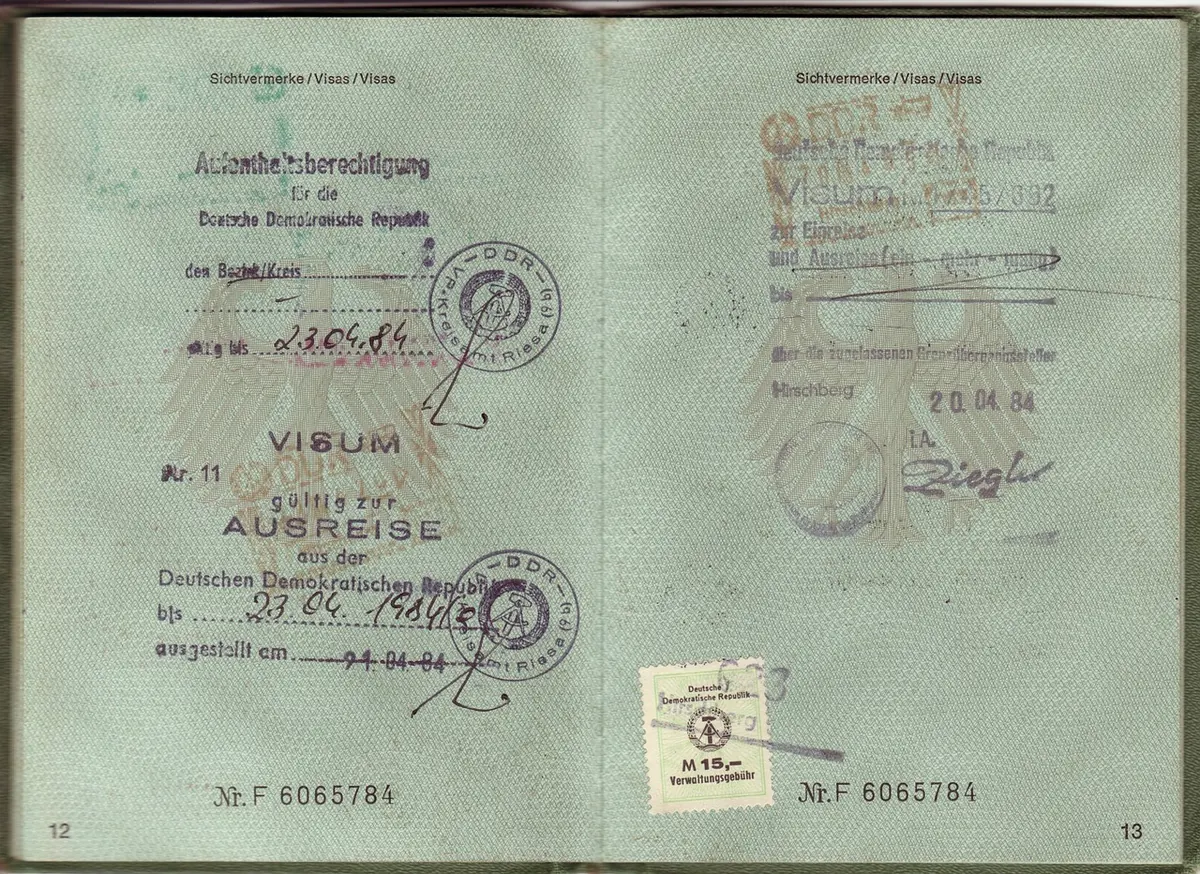
A passport of this era usually holds four separate records layered on top of each other. First, an identity: name, age, birthplace, occupation, and a physical description detailed enough to separate two men with the same name from the same village. Second, an authorisation: the state's permission to be absent, sometimes with a destination written in. Third, a route: consular stamps, visas, and renewal notes added by clerks in other cities. Fourth, a chronology, because every endorsement is dated, and dates are where the story hides.
There is a fifth thing, less obvious. In much of Europe and North America, ordinary travellers could cross borders without a passport until the First World War tightened everything. So the mere existence of the document is a clue. Someone needed it. Perhaps they lived under an empire with an internal passport system, or they were heading somewhere with stricter controls, or they wanted consular protection they did not trust to arrive by other means. The paperwork itself answers a question nobody thought to ask: why did this person bother?
The Description Was Data, Not Vanity
Modern readers skim the physical description. Don't. Height, hair, eyes, nose, chin, complexion, marks, scars — this was the state's attempt at a fingerprint, and it doubles as a portrait. A man described at twenty-two as five feet four with dark hair and a scar over the left eyebrow, and at thirty-one as five feet six and balding, is a man whose file has been renewed. Officials measured roughly and guessed generously, so treat the numbers as approximate. But changes between renewals tell you time passed, and sometimes that the bearer had been ill, injured, or simply fed better.
Occupation deserves the same attention. It was often chosen to satisfy the clerk rather than to describe the working life: a seasonal harvest hand might be recorded as a labourer, a weaver's daughter as a domestic. Compare the trade on a passport with the trade on a marriage record or a census, and the discrepancies are usually more informative than the agreements.
Who Is on the Document, and Who Is Missing
This is where most family historians stumble. A nineteenth-century passport was usually issued to one person, almost always a man, and his household travelled as entries beneath his name. A wife appears as a line: age, hair colour, no signature. Children appear as a count that increases between renewals. Servants and apprentices may appear, or may not, depending on who was paying.
The consequence is a hole in the record. If you cannot find a female ancestor's travel document, it is often because she never had one. Look instead for her husband's, her father's, or a brother's, and read her as an entry. Two entries for the same child at three years old and again at seven will also establish something precious: that the family came back. Return migration is chronically under-researched, and a renewed passport is one of the cleanest proofs of it.
Stamps, Visas and the Geography of a Detour
The stamps are the most human part of the document. A passport marked for Buenos Aires but endorsed at Le Havre, then Lisbon, then a Brazilian port describes a route nobody planned at the outset — a missed sailing, a shortage of money, a quarantine, a change of mind. A visa from a country that appears nowhere in the stated itinerary suggests a refusal elsewhere. Clerks were inconsistent, ink faded, and some endorsements were never dated at all, so build the sequence from what is legible and note the gaps rather than smoothing them over.
Read the stamps with three questions in mind:
- Where does the route start? The issuing town is often a village the family left before the port everyone remembers.
- Where does it double back? A second stamp from a first port means the journey failed or was interrupted.
- What language is used? French was the diplomatic default, but a passport written in two languages hints at a borderland household, and the spelling of a surname in one of them may be the version that survives in later records.
The Dates Are the Real Story
Issue dates and renewal dates convert a document into a timeline, and a timeline can be laid against the world. A passport issued in spring and first endorsed in autumn suggests months of preparation, not a sudden flight. An issue date weeks after a failed harvest, a conscription levy, or a wave of local violence points to a decision made under pressure. An issue date two years before departure suggests something else entirely: a plan that stalled.
And then there is the passport that was issued and never used. No endorsements, no visas, no renewal. That document is not a failure of research. It belongs to the relative who intended to leave and stayed, and it explains a family split more honestly than any later recollection.
Corrections, Crossings-Out, and Arguments With the Clerk
Slip a folded sheet into a coat pocket for a decade and it acquires repairs: a stitched spine, a wax seal, a line of text struck through and rewritten because a clerk disagreed with the applicant. Treat those marks as evidence rather than damage. A corrected age may be the only surviving trace of an uncertain birth date. A struck-through destination may be the plan the family abandoned. A second surname added in another hand is often the name that appears on the other side of the ocean.
The document records what the state needed to know. Your job is to notice what the family needed it to say.
Reading a Family Passport: A Practical Sequence
- Photograph before you handle. Both sides, the inside of the fold, the edges of any seal. Then transcribe every word, including the boilerplate — the formulas reveal which authority issued it and under what law.
- Build a dated list. Every issue, renewal, visa and stamp, in order, with the place of issue. Leave blanks where the ink has gone.
- Search for the application, not just the passport. The file behind the document usually contains more: a birth record, an oath, a guarantor's signature, a photograph in later decades.
- Match arrival dates against passenger lists. A passport says when someone left; a ship's manifest says when they landed, and the gap between the two is where the family story usually sits.
- Check the siblings. Families migrated in chains, and a brother's passport frequently dates a sister's departure better than her own missing paperwork.
- Note spelling variants without correcting them. Indexers and clerks normalised names for a century; the passport may preserve the version that every later record lost.
Access rules differ from country to country and change often, so start with the national archive that issued the document, then ask the local historical or genealogical society, which usually knows the finding aids better than any website. If the document touches citizenship, inheritance or a pension claim, treat it as legal evidence and take professional advice before relying on it.
One last thing. The most valuable page is rarely the one with the portrait. It is the back, where the endorsements accumulate in different hands, in different cities, over years. That is the page where a piece of paper stops being an identity and becomes a journey.
Photo: 2211438 / Pixabay